Research Blog Helen White
Creating science hypothesis' and statistical conclusions about the world!
RECENT POSTS
Research project (Reaction Time vs Distance in Lunge Success)
ABOUT
A SLOHS sophomore interested in conducting scientific research along with statistical observational studies. In this webpage, you will follow me through my journey of research and data analysis to answer hypothesis' I have developed about the world, and how science can connect it all!
-
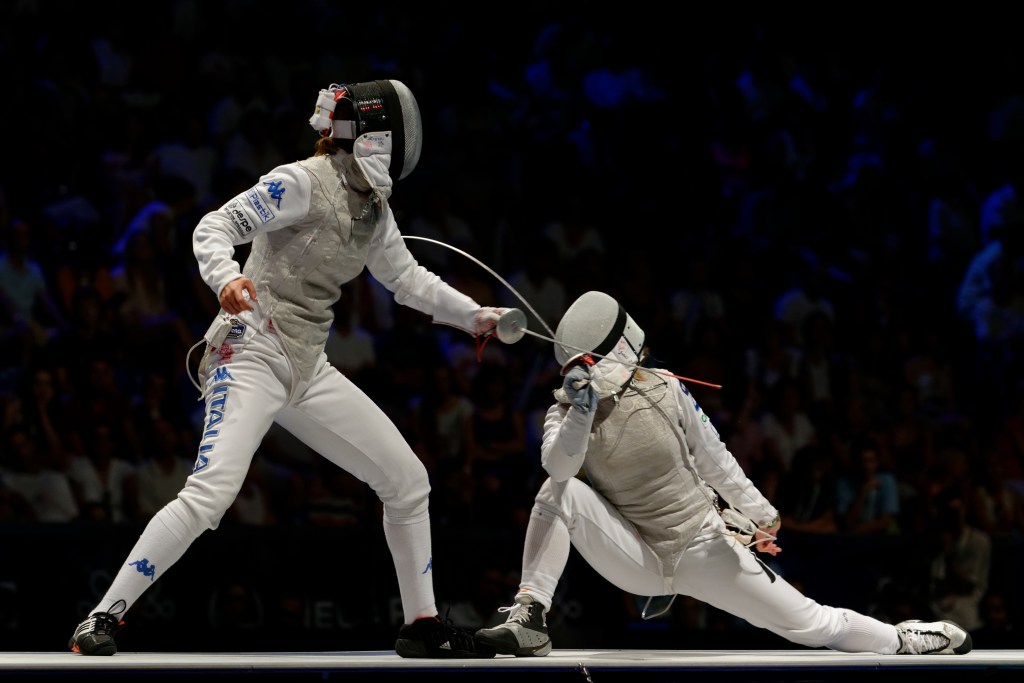
Reaction Time vs Lunge Success (Physics)
Have you ever wondered if the speed of your decision making in fencing was actually the reason your lunges weren't hitting? Fencing is a tempo sport, and timing is crucial. Lunges, depending on what style you use, are normally  2 to 4 seconds; but how many tempos are to many, or how do top fencers speed up their attacks whilst still keeping precision? I found this trouble when making my attacks in ranked tournaments, and observing top fencers complete a lunge, I wondered if their lunge success was directly associated with the reaction time of their opponent to complete a parry. In other words, if you complete a lunge faster you will land a hit on your opponent. But then this had me thinking about two or even three tempo lunges like a balestra or an advanced lunge.

I conducted a chi-squared test for Independence to prove my hypothesis. Below is the data collected for my observational study from a random sample of lunges performed at a local tournament.

                                                                 HIT                                  NOT HIT                                TOTAL
Lunge: 1 second
(no parries)10 12 22 Advanced Lunge: 2 seconds (no parries) 6 12 18 Balestra: 0<x<1 second (no parries) 14 5 19 Total: 30 29 59 CHI-SQUARED TEST FOR ASSOCIATION | STAT TEST C
Null Hypothesis: There is no association between lunge type and the success of making a hit.
Alternative Hypothesis: HO is false.
Large Counts: All expected counts found in Matrix B (11.2, 10.8, 9.2, 8.8, 9.6, 9.3) > 5
10%: 59n<590N assuming that there were approximately 590 lunges made at the eight hour tournament in women's foil.
Random: A random sample of 59 lunges at the local tournament.
(10-11.2) ²/11.2 + (12-10.8) ²/10.8 . . . = χ2= 6.430 p-value= 0.040 α = 0.05 df=2
Since the p-value(0.040) < α (0.05) , we reject HO. There is enough convincing evidence to say that there is an association between lunge type and the success of making a hit. Therefore, the faster you make a lunge (or the faster lunges in range), the higher success you will have in landing a hit on your opponent because they cannot react in time with the tempo.
 Research Blog Helen White